
"China coffee origins"
8000 article(s) found

History of coffee origin and spread
The Arabs failed to spread coffee in Asia, but the Dutch did! During their colonization, they planted coffee in Malabar, India, and brought coffee to Batavia, Java, Indonesia, in 1699. The Dutch colonies were once the main suppliers of coffee to Europe. Indonesia is currently the fourth largest coffee exporter in the world.

China's coffee market will reach 300 billion yuan in 2020
In recent years, more and more Chinese people have begun to taste Western drinks on the tip of their tongues, with coffee undoubtedly bearing the brunt. Annual coffee production in China will double in the next five years and may increase again if demand is sufficient and prices allow farmers to profit, executives at Volcafe, the coffee division of EDFMan, the UK commodities trader, said on November 10th. This year's domestic coffee

American Santos Coffee ushered in a New era of Coffee in China
Professional baristas Please pay attention to the Coffee Workshop (Wechat official account cafe_style) nowadays, with the society changing rapidly and the pace of life getting faster and faster, people have little time to sit in the coffee shop and enjoy a cup of delicious coffee. Santos Coffee from the United States came to China with the concept of street coffee to change this situation, so that every coffee lover can buy the taste easily and quickly.

True Blue Mountain Coffee at an altitude of 1800? Coffee trees of this height can hardly survive.
Recently, when I looked up the information on the Internet, I saw a lot of information saying that on the top of more than 1800 of the Blue Mountains, there is only one manor, that is, Amber, which is of Chinese descent. The owner of the manor is Lyn (Lin), originally from Guangdong, China. I think there may be a bit of a mistake here, because coffee trees can hardly survive at a height of 1800 meters. Jialumeng Coffee once asked Zhuang during its meeting in 2007.
What about the procedures for the entry list of imported coffee beans? can raw coffee beans go through customs
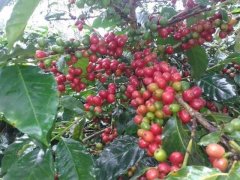
Professional coffee knowledge exchange more information about coffee beans Please follow the coffee workshop (Wechat official account cafe_style) Coffee beans refer to the plant fruits used to make coffee. In a broad sense, there are two kinds of coffee beans in the world, Arabica beans and Robosta beans. The fruit of coffee consists of two oval seeds opposite each other. The connecting side of each other is a flat joint, which is called flat bean.

When was coffee introduced into China? when did coffee become popular in China?
The history of the introduction of coffee into China is not long, and it was not until 1884 that coffee was first planted in Taiwan Province. In the mainland of the motherland, the earliest coffee cultivation began in Yunnan. At the beginning of the 20th century, French missionaries brought the first batch of coffee saplings to Binchuan County, Yunnan Province, and began to grow coffee in the mainland. Chinese people have been drinking tea for thousands of years.

Post-Valley Coffee enters ready-to-drink Coffee. Is the quality of authentic Post-Valley Coffee good? how about Post-Valley instant black coffee?
Professional coffee knowledge exchange more coffee bean information please follow the coffee workshop (Wechat official account cafe_style) 2017, China's local coffee leading company Hougu Coffee officially launched the original bean extraction technology to produce fragrant latte ready-to-drink coffee, officially announced to enter the ready-to-drink coffee market

When was coffee introduced into China? coffee development in China
In terms of natural conditions, many parts of China are very close to Latin America, South America, India, Indonesia and other places, with the congenital conditions of coffee cultivation, but the traditional culture and customs restrict the development of coffee in China. It was not until recent years that coffee was grown as more coffee entered the lives of ordinary Chinese people and with the impact of foreign culture and way of life.

Pu'er, the first coffee comprehensive manor in China, lays the foundation of China Coffee Trading Network
Original title: China's first Coffee Comprehensive Manor Pu'er laid the Foundation of Pu'er on April 19 (Reporter Chen Hongyan) Aili Manor, China's first livestock rainforest coffee comprehensive manor, recently laid the foundation in Pu'er, and the construction is planned to be completed in 2020. The Aili Manor project covers a total area of 30, 000 mu, with an average elevation of 1500 meters above sea level, with several geothermal hot springs and an average temperature of several geothermal springs winding along the Manao River.

Coffee brands drink coffee every day in China into three categories.
Different people have different ways to adjust their mood, and the most popular nowadays is to prepare a strong cup of coffee. In this process, each mouthful seems to digest their emotions and adjust their state. Then listen to your favorite music, read fashion leisure magazines, at that moment do not think of anything, only nostalgia in the taste of coffee state. Supply on the market
The Origin and Market of Blue Mountain Coffee
A real Blue Mountain Coffee is in the triple digits, but as one advertisement said, not all milk can be called the same, and not all Blue Mountain beans can produce the flavor that Blue Mountain Coffee should have. Because the real flavor of Blue Mountain Coffee is the combination of beans and processing technology, rather than simply imported Blue Mountain beans. The market is the same as Lanshan raw beans. The difference of cooked beans is 10 times. China accounts for 15% of the total consumption.
The Origin of Coffee in the Consulate of Kashgar, Xinjiang (Historical knowledge)
Catherine Martney, wife of the British Consul General in Kashgar, Kashgar, is a brave English woman who has lived here with her husband for 17 years. In 1931, she wrote "the memory of a diplomat's wife to Kashgar" affectionately and in a delicate and warm tone. In 1898, an ordinary woman as far away as Great Britain

The reason why coffee is so popular in Korea
When I first arrive in China, I will see a strange phenomenon. No matter whether it is to discuss business, study or have a chat, most of my friends from other countries will have this feeling. Would you like to have a cup of coffee? However, after living in China for a period of time, we all know that Chinese people love to drink coffee, and all kinds of coffee bars can be found on the streets and alleys. Laos is not the country of origin of coffee, but the coffee culture of Laos is over.

China WBC Previous Judges-2016 WBC Coffee Contest Time Registration Method Introduction
(1) Espresso part From the rating table, we can see that the scores are basically only about average. In fact, during the pre-game practice time, we were secretly worried every time we drank ESPRESSO. It may be mainly due to the long-distance flight, which causes the coffee to lose a large part of its original flavor, which may also be caused by the local humidity environment. to scoring

Will you continue to drink Starbucks to domestic coffee?
Every reporter Yuan Dong Zeng Zijian, I'm not at Starbucks, I'm on my way to Starbucks. This sentence is said by many coffee lovers. In China, it seems to drink a cup of Starbucks coffee, immediately become a petty bourgeoisie, immediately have a high-end image. However, if some of Starbucks' products will be made domestically, are you still willing to spend dozens of yuan on a cup? Today, Starbucks announced that it is working with Kangshi.

The historical origin and spread of coffee
Coffee into Asia the Arabs failed to spread coffee in Asia, but the Dutch did! In the process of colonization, they grew coffee in Malaba, India, and brought it to Batavia in what is now Java, Indonesia, in 1699. The Dutch colonies once became the main supplier of coffee in Europe. At present, Indonesia is the fourth largest coffee export in the world.

The historical origin and spread of coffee
Coffee into Asia the Arabs failed to spread coffee in Asia, but the Dutch did! In the process of colonization, they grew coffee in Malaba, India, and brought it to Batavia in what is now Java, Indonesia, in 1699. The Dutch colonies once became the main supplier of coffee in Europe. At present, Indonesia is the fourth largest coffee export in the world.

Description of Historical and Cultural Origin and Flavor of Chinese Coffee cultivation introduction of Grinding scale varieties
Description of the Historical and Cultural Origin of Coffee in China Flavor description Grinding scale Variety introduction Coffee production in Yunnan Province has been developed since the mid-1950s, mainly planted in Shuangjiang Farm and Dehong Sub-Bureau in Lincang area, covering an area of 18.67 hectares. it is also planted in small areas in Shaofang, Hekou, Lujiang, Jinghong, Olive Dam and other fields. Since 1957, the local environment is suitable for coffee growth.

When was coffee introduced into China? How does coffee spread to China? The development of coffee in China
The history of the introduction of coffee into China is not long, and it was not until 1884 that coffee was first planted in Taiwan Province. In the mainland of the motherland, the earliest coffee cultivation began in Yunnan. At the beginning of the 20th century, French missionaries brought the first batch of coffee saplings to Binchuan County, Yunnan Province, and began to grow coffee in the mainland. Chinese people have been drinking tea for thousands of years.
Domestic coffee has entered the fourth stage of the boutique era.
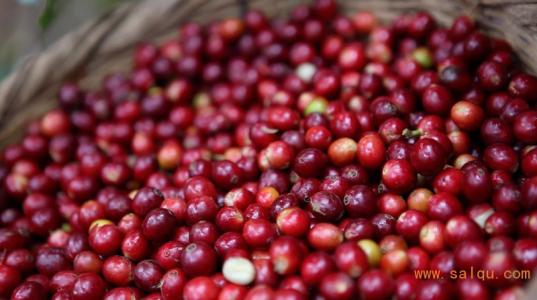
The first stage: Nestl é starts its day with a good day, influencing and transforming the way of life of Chinese people, so that more people can try and accept coffee. The second stage: Shangdao Cafe, advocating freshly ground coffee to make more people accept the original coffee, and expanding all over China with its chain business model. Shangdao Cafe opened more than 2600 coffee in mainland China at this stage.